
Engine Room & Technical News

Safe Working Practices in the Engine Room
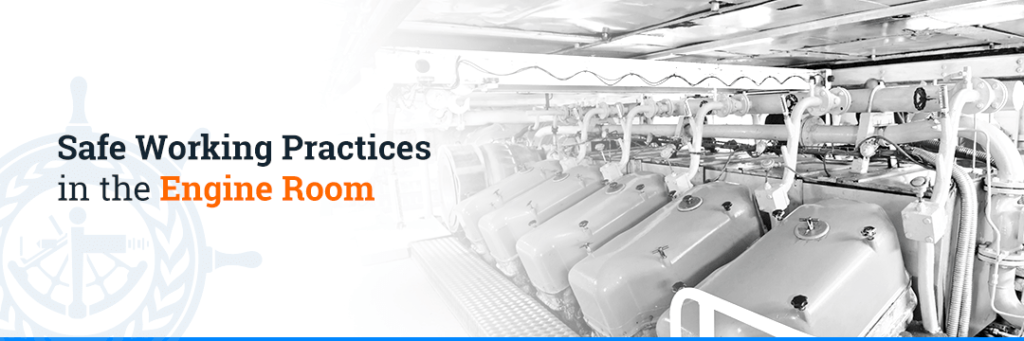
Ship engine room safety is paramount. As the power center of your vessel, dysfunctional engine rooms can produce mechanical errors, downed machinery, discord and — most pressingly — extreme safety hazards for your crew.
Given a cargo ship engine room’s unique environment, it requires equally unique safety practices compared to other areas of your vessel. These safety procedures are designed to safeguard seamen from everyday complacency to cataclysmic accidents.
Use this guide as a resource for orchestrating effective engine room safety procedures to equip your crew with the right knowledge, processes and tools to combat engine room dangers. Plus, learn how to create a safety management system that ties it all together.
Why Create a Safety Management System for the Engine Room?
Safety management systems (SMS) provide the foundation for high-functioning, clean and safe operations in your ship’s engine room. Without such procedures, engine rooms may present risks for dozens of accidents, including any related to the following:
- Blocked escape routes: Disorganized engine rooms increase the chances of blocked emergency exits. Poorly maintained engine rooms may also have defective lighting, causing escape trunks not to illuminate as they should. Both these are severe safety hazards that could prevent swift evacuation in the event of emergency exits.
- Precarious waste or garbage buildup: Engine rooms inevitably create waste byproducts, particularly oil rags and other oil-cleaning materials. Exothermic reactions can trigger oily rags and discarded oil-stained supplies to ignite when near hot engines. When soaked with fuel, these rags are dangerous fire hazards in the hot environment of a ship’s engine room.
- Unsafe deck plates: Deck plating creates safe pathways for crew members to maneuver through the engine room. Slippery, tarnished, rusted or loose deck plates are common causes of slips and falls into bilges, risking serious injuries for your team.
- Jammed doors: Engine room conditions can wear and rust door hinges. Complacent housekeeping procedures in the engine room can also cause disorganization, with items blocking doors and impeding clear entries and exits.
- Working-at-height hazards: Ship engine rooms are designed with elevated decks and contain substantially sized machinery. Crew members in the engine room technically work at height and therefore need a working environment with height-related protections — including handrails, partitions, sections, chains and other physical parameters that help prevent falls.
Establishing an SMS helps control, if not minimize, these top engine room risks.
What to Include in Your Cargo Ship Engine Room’s SMS
Written SMS booklets outline proper engine room procedures and activities for all crew members. A written SMS policy should cover the following:
- Required engine room PPE, such as anti-slip safety shoes, helmets, puncture-proof gloves, protective eyewear, coveralls, and more.
- Emergency procedures outlining specific crew member’s roles and responsibilities.
- Safe working loads and capacities for engine room lifts alongside other utilized machinery and equipment.
- Protocols surrounding how to document accidents.
- Electric loads and circuit capacities to avoid overloading any system in the engine room.
- Clear communication workflows and channels among shipboard members as well as between ship crews and shored personnel.
- Environmental protection policies following flag state marine environmental regulations.
- Overall vessel details, including item storage, door securing, fitting and fixture maintenance and operational expectations across work and transit areas.
It’s essential every cargo ship or vessel crew member receives a personal copy of your SMS. Distributing these policies, then reviewing the safety procedures during formal training sessions, sets proper expectations for new and veteran crew members on how to conduct themselves within your vessel’s engine room.
In addition to creating an SMS, the following are important engine room safety practices:
- Proactive ship oil disposal protocols
- Safe bilge management and bilge area care and maintenance
- Fire safety practices and precautions.
Properly Dispose of Oily, Contaminated Materials
Managing oil-tainted materials, sewage, greywater, toxic byproducts and other contaminated substances in and around the engine room is an essential function of your vessel’s SMS.
Improperly disposed of contaminants pose many threats, from onboard fire hazards to potential compliance issues with domestic marine environmental regulations. What’s more, if improperly contained, contaminated materials are linked with health problems for crew members who may be exposed to them for long periods.
Ensure your written SMS policy has a section onship oil disposal and waste management methods, including:
- Sewage and liquid waste disposal: Onboard retention tanks and installed grease traps are a must for cargo vessels to aggregate liquid waste safely. Untreatable liquid waste cannot be disposed of in areas where water supplies are drawn. Nor can liquid waste and sewage be discharged overboard into open water — with the exception of treated bilge water, which can be environmentally discharged. Retention tanks are generally emptied via shore servicing, with special hoses and barges deployed to collect waste.
- Solid waste storage: Generally, engine room-related solid waste cannot be discharged via ocean dumping. Instead, vessels must have garbage storage rooms and stainless steel retention tanks that are discarded when docked. Any sludge accumulated in engine rooms must be stored in enclosed, dedicated sludge tanks, then pumped and discarded at designated land-based facilities.
- Bilge water: Vessel bilges accumulate water from onboard sources, such as boilers and water draining systems. However, engine rooms also contribute to bilge water, notably via oil, hydraulic fluid, antifreeze and other fuel solvents. These environmentally toxic engine residues are separated from bilge greywater matter by an oily water separator (OWS), which has its own maintenance and care instructions that must be facilitated by trained crew members. Filtered water is permitted for overboard disposal when on the open sea, but the separated engine room sludge is not.
- Oil-contaminated materials: Engine rooms inevitably produce oil-stained and contaminated materials, like rags and cleaning equipment. All crude oil contaminants must be disposed of following flag state environmental regulations and cannot be dumped overboard, as oil and fuel byproducts are harmful to the ocean. Typical permitted disposal techniques include on-vessel incinerators or the transfer of oil waste to disposal facilities once docked.
Source: https://www.mitags.org/safe-engine-room/

Hi, this is a comment.
To get started with moderating, editing, and deleting comments, please visit the Comments screen in the dashboard.
Commenter avatars come from Gravatar.